ADA-Compliant Portable Toilets: Comprehending the 5 Percent Regulation
If you have ever stood in a field, on a jobsite side, or outside a momentary occasion place attempting to find out the number of mobile bathrooms to order, you understand how rapidly the discussion moves from easy logistics to access, dignity, and lawful responsibility. The 5 percent regulation sounds straightforward initially. In method, it is among one of the most generally misunderstood components of portable hygiene planning.
That misunderstanding usually begins with a poor presumption: if a site is short-term, the availability regulations should be flexible. They are not flexible in the method lots of people wish. For portable single-user commode clusters, a minimum of 5 percent of the devices in each cluster need to be accessible, and that expectation applies even at momentary occasions. That factor issues since temporary arrangements commonly create the very problems that make accessibility harder, uneven ground, hurried layouts, crowded lines, and positioning decisions made by whoever arrives first with a forklift.
An ADA compliant portable commode is not just a typical device with a bigger footprint. Accessibility relies on the device itself, the route to it, the entry, the surrounding surface, and the technological toilet-room features inside. When any among those pieces is disregarded, the result might look acceptable from twenty feet away while still stopping working the individual that really requires to make use of it.
What the 5 percent rule truly means
The phrase people remember is "5 percent," but the word that does the actual work is "cluster." The need puts on each collection of portable single-user bathrooms. In simple language, if mobile toilets are grouped together in one location, at the very least 5 percent of that group have to be accessible.
That appears practically as well straightforward, which is why it gets mishandled. Event organizers often total every device across the whole residential or commercial property and assume they can place all accessible devices in one spot. That is not the factor of the regulation. Accessibility is supposed to exist where the washroom access exists. If there are different restroom financial institutions serving various locations, each collection needs to be evaluated on its own.
That difference issues on event premises, fairgrounds, sports fields, performance sites, and big outside gatherings where restroom financial institutions are spread throughout entries, food courts, seating areas, and car parking areas. A person making use of a mobility device should not need to go across the entire website since the available mobile bathroom was counted elsewhere on paper.
In everyday preparation, the 5 percent requirement additionally develops a rounding inquiry. The validated policy is that at least 5 percent of devices in each collection should be accessible. The risk-free reading is the sensible one: if 5 percent creates a portion, you can not give a fraction of a bathroom, so the number of accessible units requires to be adequate to fulfill or exceed that percent. What issues operationally is staying clear of any calculation that dips listed below the minimum.
Temporary does not suggest exempt
One of the most persistent misconceptions in mobile bathroom planning is that short-term occasions exist in a type of grey location. They do not. The ease of access expectations still use. The Gain access to Board's interpretation is clear that the 5 percent need uses also at temporary events.
This is where issues usually begin. A team spends weeks on safety and security, food solution, fencing, power, and waste removal. After that portable washrooms are included late at the same time, after the most effective ground is already taken and routes are currently crowded by staging, generators, barricades, or supplier outdoors tents. Then, the accessible devices might practically be onsite yet functionally pointless due to the fact that the path to them is blocked or unstable.
I have seen this planning pattern in lots of types. No one intends to leave out any individual. It occurs since availability obtains treated like a product selection as opposed to a site-planning decision. Buying an ada compliant portable commode is only the primary step. Positioning is where compliance is either maintained or lost.
What makes a mobile washroom accessible
People commonly utilize numerous phrases reciprocally: ada portable restroom, ada mobile toilet, ada handicap easily accessible portable restroom, or ada compliant easily accessible portable washrooms. The phrasing differs, however the lawful and practical question is the same: does the device and its installment please the suitable availability requirements?
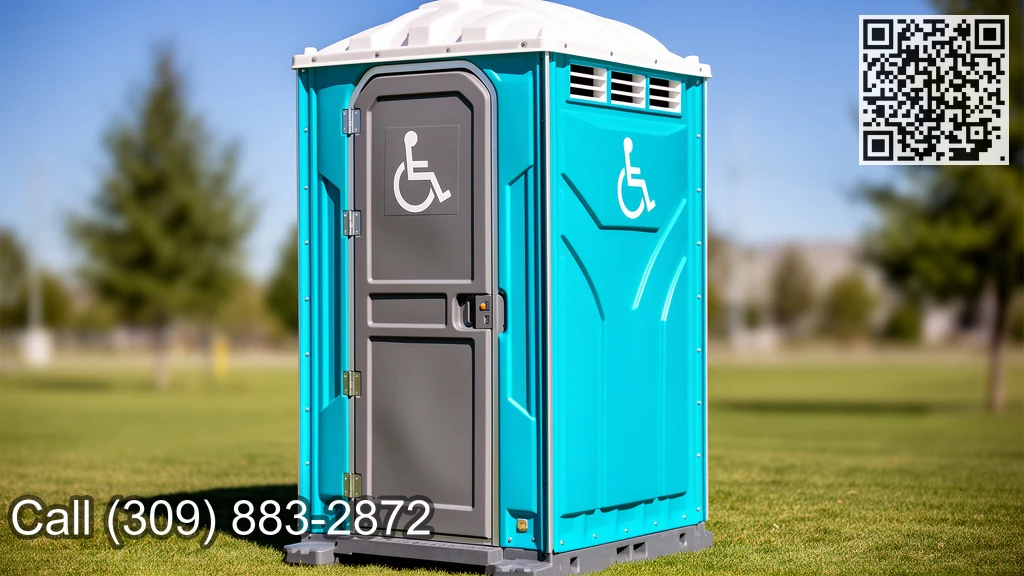
An accessible portable system need to be understood the International Sign of Ease Of Access. That marking is not decorative. It tells customers which device is planned to offer access and helps team, assessors, and participants recognize it quickly.
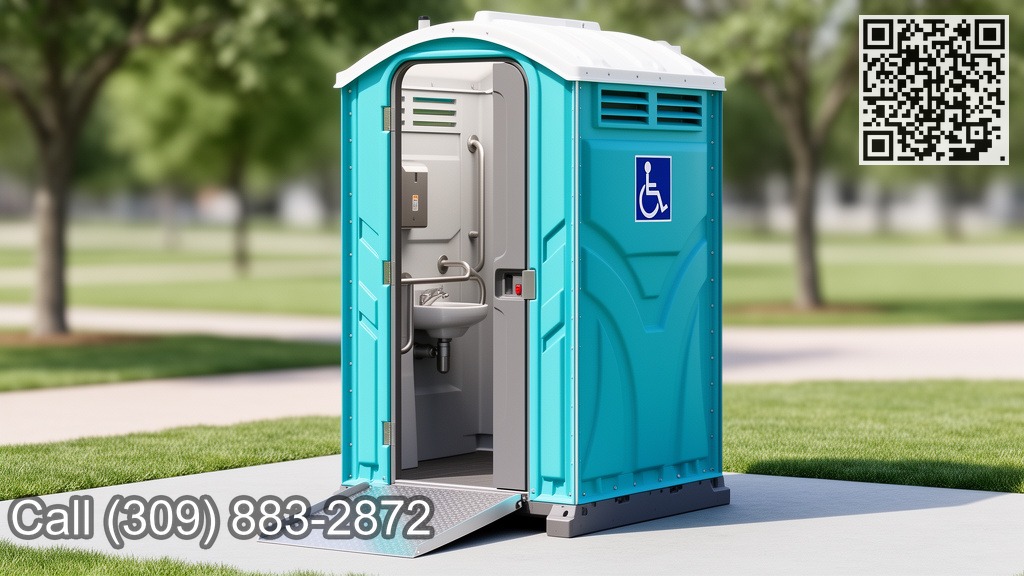
The system must additionally have an easily accessible course and entryway. This is where or else respectable plans fall apart. If the path to the system is soft, busted, blocked, or set up in a way that stops approach, the available tag on the door does not deal with the trouble. If ramps or landings are required, those features should comply with the ADA technological demands as well. The route and entrance condition belong to ease of access, not extras.
Inside the system, technological toilet-room demands still matter. Those consist of the required transforming room, clearances, and door maneuvering clearances, in addition to relevant grab-bar and water-closet clearance policies. It deserves slowing down here since numerous customers and occupants assume "larger cabin" indicates "certified cabin." Size by itself confirms very little. A spacious device can still fall short if the clear floor room, turning area, door technique, or fixture relationships do not interact as required.
That is why seasoned rental groups ask various questions than first-time coordinators. They do not simply ask the number of devices you desire. They ask where the clusters will certainly lie, what surface area they will remain on, exactly how individuals will certainly approach them, and whether any momentary ramps or touchdowns are required. Those inquiries are not upselling. They are the useful foundation of ada portable toilet requirements.
The path to the washroom matters as long as the restroom
A lot of availability failings take place outside the door.
Picture a neighborhood event on yard after a week of rainfall. The organizer orders an ada certified portable washroom, puts it at the end of a row, and checks package mentally. By afternoon, the ground around the entry is spun right into ruts by foot website traffic and solution carts. The available system is technically there, yet getting to it is now https://andersonmygp807.lumenforgex.com/posts/selecting-an-ada-easily-accessible-portable-toilet-rental-for-public-use the hardest part.
That example is common because people assume in terms of fixture compliance when they ought to be believing in terms of traveling. The route, the entry, and any required ramps or landings are not second considerations. They are core to whether the washroom can be made use of independently and safely.
This is also where "close adequate" creates problem. If an accessible unit is placed near, but not within, the actual washroom collection offering a specific location, users may still encounter a lengthy detour. If it is put behind barricades, put at the end of an incline, or reached just by going across loosened gravel or sloppy turf, the practical outcome can be exclusion also when the rental invoice states "ADA device."
Why the collection rule modifications planning on bigger sites
Smaller events can usually deal with errors with a quick positioning adjustment. Bigger sites are much less forgiving. When fencing, emergency situation access lanes, vendor footprints, and utility runs are established, relocating washroom financial institutions can interrupt a number of divisions at once.
That is why the cluster principle is worthy of interest early. If your website has numerous groups of toilets offering distinct zones, you must think about availability area by zone, not just sitewide. Counting whatever together can leave one area without any sensible access at all.
A huge occasion with a number of collections shows the point well. If one financial institution of systems is near the main gateway, one more near food service, and another by distant vehicle parking or camping locations, each of those collections needs its very own obtainable existence. A solitary ada accessible mobile bathroom near the entryway does not meaningfully serve a remote bathroom rely on the far side of the grounds.
The exact same logic applies past enjoyment. Outside construction-adjacent public jobs, community celebrations, short-lived public service websites, and seasonal procedures all take advantage of dealing with toilet accessibility as distributed infrastructure rather than a single compliance tally.
The narrow construction difference that perplexes people
There is a certain detail in the standards background that commonly gets repeated without context. The ADA standards have distinguished portable toilet devices at construction websites used solely by building employees. In the cited 1991 criterion, those units were excluded from the portable-toilet ease of access scoping requirement.
That sentence gets overextended all the time. People listen to "construction website" and assume any kind of mobile commode delivered to any type of job-related setup is excluded. That is not a secure presumption. The verified context right here is slim. For general mobile toilet leasings, the accessible-unit demand remains.
The useful lesson is basic. Unless you are handling that particular, limited circumstance, do not construct a restroom plan around the idea that accessibility policies in some way drop away since the website is temporary or job-related. If participants of the general public, occasion guests, clients, site visitors, or others outside that narrow scenario will use the systems, you must come close to the setup anticipating accessibility commitments to apply.
What customers and renters must ask prior to delivery
When people search for ada portable bathroom rental solutions, they frequently focus on stock initially. Supply matters, obviously, yet accessibility is only half the concern. The even more enlightening concern is whether the carrier comprehends what has to happen once the system arrives.
A careful discussion prior to delivery can prevent costly scrambling later on. The best questions are useful, not abstract.
- How lots of different washroom collections will certainly the site have, and how many accessible devices are required in each one?
- Where is the accessible route from the major flow course per available unit?
- Will the entry location, and any required ramp or landing, fulfill the applicable technological requirements?
- Is the system clearly related to the International Sign of Accessibility?
- Has anybody inspected whether the surrounding design leaves adequate technique and maneuvering space when barriers, fence, and other devices remain in place?
That short checklist catches most of the avoidable errors I see in the area. It likewise shifts the discussion from "Do we have an ADA device?" to "Will this configuration really work for individuals who need it?"
Language issues much less than performance
The market uses a lot of overlapping terms. You will certainly see ads for ada certified portable bathrooms, ada-compliant mobile restrooms, ada compliant portable toilet, ada-compliant mobile toilet, and ada certified portable toilets. You may likewise listen to older phrasing like ada handicap available portable restroom.
From a compliance and customer viewpoint, the tag itself is lesser than the material behind it. A vendor can describe a device in several means. What matters is whether the unit is correctly identified, available by route and entryway, and configured to satisfy the appropriate technological demands for commode rooms.
This is one factor skilled coordinators do not rely upon a product name alone. "Mobility device available," "large delay," and "ADA design" may all seem encouraging, yet they are not interchangeable terms. If you are accountable for the arrangement, your actual job is to verify that the unit and its placement please the criterion, not simply that the sales brochure makes use of the appropriate vocabulary.
Common blunders that look small up until a person requires the unit
Portable washroom availability has plenty of tiny choices that seem harmless up until they combine into an actual barrier. An unit set a few inches off degree, a route narrowed by short-term fence, an entrance method pinched by an adjacent garbage terminal, or a ramp included late without focus to technological demands can all change whether the toilet is usable.
I keep in mind one occasion design review where the team had actually done almost everything right. They had the ideal count, the right circulation, and the ideal system type. The problem was a row of crowd-control barriers positioned after the restroom map was authorized. Those barriers minimized navigating area at the easily accessible entry. On paper, the event had compliant centers. On the ground, one late adjustment endangered access.
That sort of issue is frustrating due to the fact that it is preventable. The repair is not normally significant. It is generally a matter of examining the final positioning nevertheless the "little bonus" are mounted. Availability tends to stop working in the handoff between preparation and execution.
Compliance is part of a wider enforcement climate
Accessibility conversations are also occurring in a larger conformity atmosphere. Federal ADA task has continued across industries, including more current support related to accessibility responsibilities in digital areas for state and city government entities. Although web and mobile access policies are a different topic from mobile hygiene, the larger signal is hard to miss: ADA compliance is not an inactive issue.
For businesses, municipalities, institutions, locations, and coordinators, that wider climate needs to encourage an elder approach. Access is not a box to inspect at the end of purchase. It belongs to functional planning, much like security, hygiene, and crowd flow.
That frame of mind aids with portable restroom decisions because it reduces last-minute improvisation. Teams that consistently believe this way have a tendency to document washroom collections early, reserve accessible devices early, safeguard easily accessible paths during site buildout, and examine the ended up design with fresh eyes before opening.
A functional way to think about the 5 percent rule
If the lawful phrasing feels abstract, there is a straightforward method to bring it down to earth. The 5 percent regulation is truly regarding making sure easily accessible usage is developed right into each restroom experience people will actually come across onsite. Not somewhere else, not theoretically, and not just if team action in to help.
That perspective alters the top quality of decisions. As opposed to asking, "Did we order a minimum of one ada mobile restroom?" you begin asking, "If a visitor comes close to any type of bathroom area on this site, will there be an available option there, and can they get to and utilize it without unneeded barriers?"
Those are the inquiries that divide formal compliance from meaningful access.
Where mindful judgment still matters
Even with clear guidelines, portable bathroom planning still calls for judgment. Websites are uneven. Climate modifications. Vendors arrive late. Traffic patterns change. Short-term does not indicate simple.
The greatest washroom strategies leave area for those truths. They do not deal with ease of access as a single unit trust a spread sheet. They secure the path, maintain the entrance, maintain the symbol noticeable, and validate the arrangement after the website is fully built.
That is particularly important when preparing ada certified mobile washrooms for public-facing occasions. People do not experience your bathroom strategy as a lawful theory. They experience it as a minute of demand, usually immediate, in some cases demanding, and constantly personal. When gain access to functions well, it really feels ordinary, which is precisely the factor. When it stops working, the failing is instant and public.
The 5 percent guideline is not there to complicate preparation. It exists due to the fact that accessibility can not depend on luck, range, or improvisation. If you are ordering an ada portable bathroom rental, taking care of a venue, or approving a website map, that is the conventional worth aiming for: not just enough devices theoretically, yet a setup that people can in fact use with dignity.
 Ask ChatGPT
 Ask Grok
 Ask Perplexity
 Ask Claude
 Ask Google AI
 Ask You